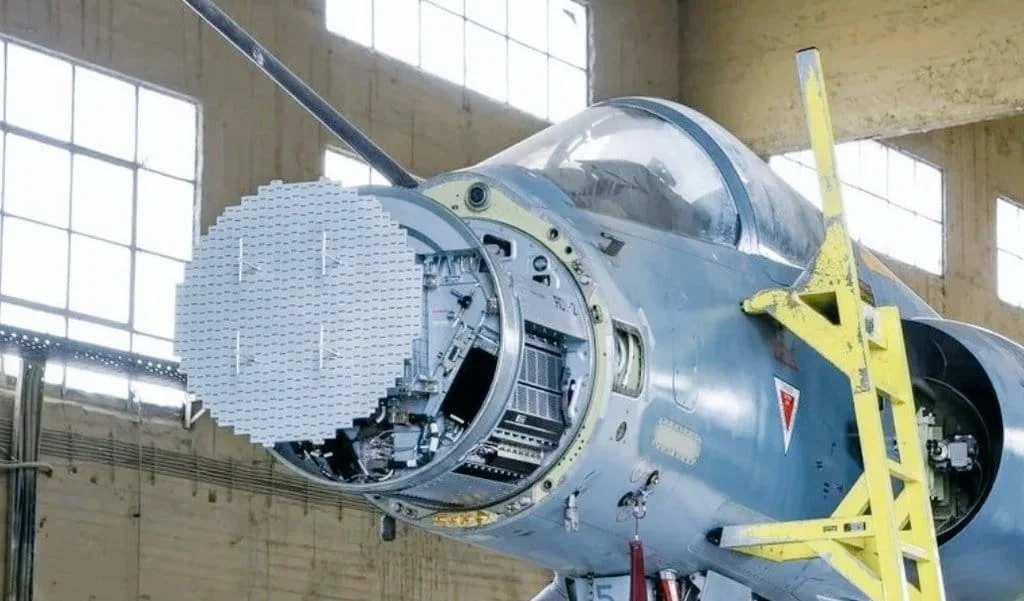
New Delhi: With the Indian Air Force (IAF) continuing to face a shortage of fighter squadrons, a proposal to upgrade its existing Mirage 2000 fleet with India’s indigenous Uttam Active Electronically Scanned Array (AESA) radar is attracting attention as a possible interim capability enhancement.
The Mirage 2000 is expected to remain in IAF service for several more years, even as newer platforms such as the Tejas Mk2 and Advanced Medium Combat Aircraft (AMCA) are developed. Supporters of the proposed upgrade argue that modernising the aircraft’s sensors could extend its operational relevance without requiring the immediate procurement of additional foreign-built fighter aircraft.

The Mirage 2000 currently operates with mechanically scanned radar systems, while AESA technology offers faster electronic beam steering, improved tracking capabilities and greater resistance to electronic countermeasures. The Uttam radar has been developed by the Defence Research and Development Organisation (DRDO) as part of India’s effort to build indigenous airborne sensor technology.
Open-source claims about Uttam have cited the ability to track multiple targets simultaneously and detect targets at long ranges, although the precise performance of any operational configuration would depend on the aircraft integration, software, target characteristics and mission environment.
A radar upgrade could also support the integration of indigenous air-to-air weapons. The Astra family of beyond-visual-range (BVR) missiles is being developed for use from Indian fighter platforms, potentially reducing dependence on imported weapon systems. Astra Mk1 has already been integrated with Indian aircraft, while longer-range variants are under development.

However, fitting a new AESA radar onto the Mirage 2000 would involve more than replacing the existing sensor. Structural modifications, electrical and cooling requirements, mission-computer integration, software development, flight testing and weapon-system certification would all have to be addressed.
The proposal comes against the backdrop of the IAF’s long-standing requirement for 42 fighter squadrons, with its current strength remaining below the sanctioned level. Delays and supply-chain challenges affecting newer aircraft programmes have added pressure on the existing fleet.
An indigenous radar upgrade could also contribute to India’s broader defence-industrial objectives by increasing domestic control over software, weapons integration and future sensor upgrades. Commonality of technology across different aircraft platforms could potentially simplify training and logistics.
The Mirage 2000 upgrade, therefore, is being discussed primarily as an interim capability option rather than a substitute for new-generation fighters. Its feasibility would ultimately depend on technical integration, cost, remaining airframe life, testing timelines and IAF procurement priorities.